
MEDICINE · EDUCATION · BIODESIGN

Alex Krawec

Fourth-year medical student at UCLA interested in psychiatry, medical education, and the design of useful clinical tools.

UCLA–Anderson Biodesign Fellow '26

Founder, Nokota MCAT Tutoring

Selected work

Clinical tools, individualized teaching, and early-stage biodesign.

ResponseMap

ADHD symptom and medication journal

A journal prototype for recording symptoms, context, and medication timing throughout the day. It brings those observations into a shared visual timeline to support more structured conversations between patients and clinicians.

The design question is how to make experiences between appointments easier to record and discuss. The prototype includes manual check-ins, selectable variables, medication-event markers, and review views. Entries remain only in the open session and clear when the page is reloaded or closed. The current version does not include saved records or provider sharing, and it does not establish medication effects or recommend treatment changes.
Clinical Timeline

A visual chronology of patient records

A visual chronology of encounters, messages, care transitions, and medication history, exploring how fragmented records could become easier to review.

The current demonstration uses fictional information. It is not a live EHR connection, a complete medical chart, or an automated record-import system.

ED Throughput Sandbox

Emergency department flow simulation

An educational simulation for exploring how arrivals, treatment capacity, diagnostic queues, and boarding assumptions affect synthetic patient flow.

The project supports scenario comparisons and replay of a representative synthetic week. Its assumptions have not been calibrated to a particular hospital; it is an exploratory model, not a validated operational forecasting tool.

LimbWatch

Wearable perfusion-monitoring concept

UCLA–Anderson Biodesign · Device prototype

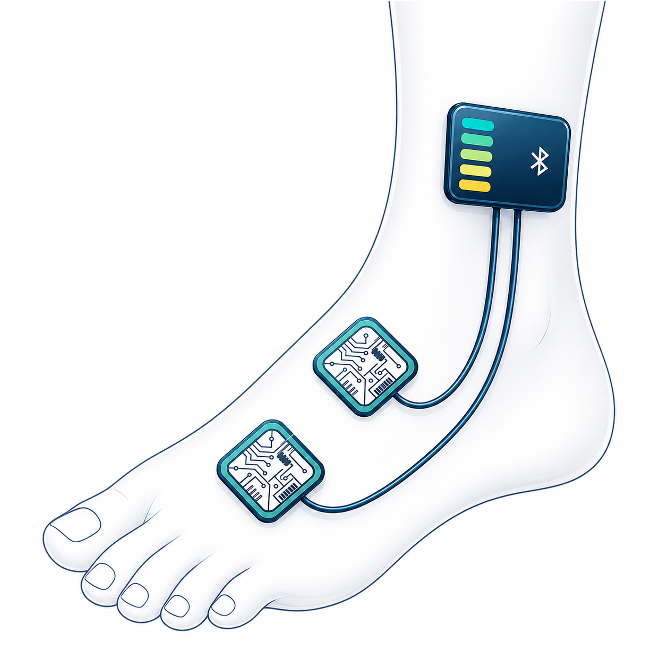
LimbWatch concept illustration showing sensor patches on a foot connected to a small monitor.
Concept illustration; development is ongoing.

Through the UCLA–Anderson Biodesign Fellowship, I began developing a wearable sensor concept to explore more consistent tracking of lower-extremity perfusion. The project grew from the burden of repeated bedside pulse assessments and remains in early development.

The concept uses photoplethysmography, or PPG, to explore quantitative monitoring over time. The broader biodesign work considered clinical workflows, stakeholder needs, adoption barriers, and feasibility. It remains a prototype rather than a validated clinical device.

More projects

  • Nokota MCAT Tutoring

    Founder and Lead Instructor

    I founded Nokota to support learners whose needs are poorly served by standard preparation plans. The program now offers free MCAT tutoring and premedical advising to accepted participants who are neurodivergent, financially under-resourced, or both, with study plans and materials shaped around each learner's barriers.

    25+ learners supported · 250+ hours of tutoring and advising

    My work includes individualized study planning, curriculum and practice-material development, tutoring, and advising. The program grew from gaps I encountered while working in commercial test preparation. Its emphasis is on adapting the preparation process to the learner's cognitive, academic, and practical constraints.

    Visit Nokota
  • Frontier Signal

    Research dashboard

    A source-linked dashboard for exploring frontier AI incidents, capabilities, safeguards, and governance, with explanations intended to make the evidence easier to assess.

    The dashboard brings together a searchable timeline, evidence summaries, source links, risk pathways, and a concern ladder. Source quality and uncertainty are part of the presentation.

    Explore dashboard

Development approach

These digital prototypes use AI-assisted software implementation. My work focuses on the problems they address, their design, and their iteration. They remain works in progress; software checks should not be read as evidence of clinical validation.